Ecg
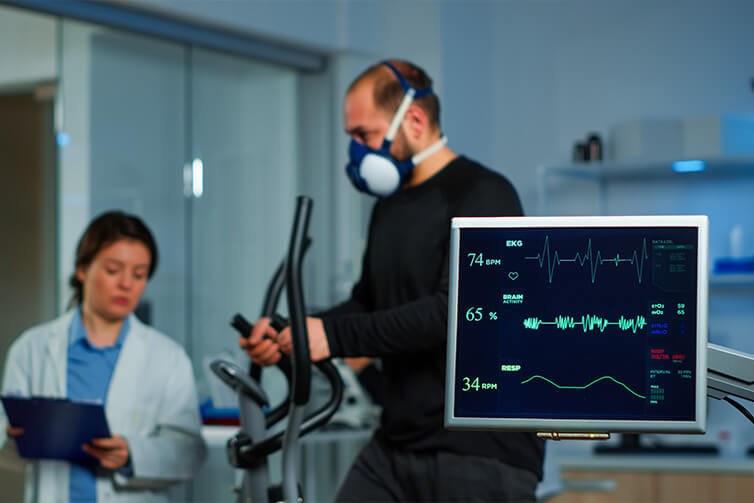
ECG, which is used for the diagnosis of cardiovascular diseases, is a device that allows the electrical activity that occurs during the contraction of the heart to be recorded graphically. A weak electrical activity occurs during the contraction and relaxation of the atria and ventricles, also known as the heartbeat. This activity contains a lot of data about the heart rhythm, frequency and propagation. An electrocardiograph, or ECG, is used to measure the electrical activity. Electrodes attached to the skin on the chest, arms and legs allow the electrical activity generated by the heart to be measured. The device to which the electrodes are connected converts this activity into graphical figures and prints them on a special paper. Thus, the physician can easily evaluate the patient's complaints about the heart. ECG is an examination method used especially in the detection of abnormal conditions such as rhythm and conduction disorders, blood supply of the heart, hypertrophy or, in other words, enlargement of the heart muscle. Before answering the question of how to take ECG, it is necessary to understand what ECG is.
What is an ECG?
ECG, which is mostly used to assess the possible risk of heart attack in people who consult a physician with chest pain, is taken with the help of electrodes attached to the skin. By measuring the electrical activity of the heart during each contraction, detailed information about the heart is obtained. In order to measure the contraction and relaxation movement created by the atria and ventricles in the heart, the stimulation of the heart by cell groups and the electrical activity that occurs during the transmission of this stimulus by ECG, 10 electrodes are attached to the patient's body. These electrodes are connected to the ECG device with cables. The data of the electrical activity are converted into graphics by the ECG device and printed on a paper called electrocardiogram by the printer of the ECG device. This paper consists of squares of 1x1 and 5x5 mm. The 1x1 mm. squares print the graphs of the electrical activity occurring every 0.04 seconds, while the 5x5 mm. squares print the data of the activity occurring every 0.2 seconds. The ECG device records heart beats consisting of P, Q, R, S, T and U waves on the electrocardiogram. The graphical values of these waves inform the physician about the patient's heart health. The ECG device can be taken anywhere because it is easily portable. Thus, the inpatient does not need to be taken to the ECG room. The fact that it is a painless, painless method and the procedure takes approximately 2-3 minutes provides convenience for both the patient and the physician. ECG, which provides rapid measurement of many data about heart health, is a diagnostic method frequently used by cardiologists and emergency physicians today.
How is an ECG taken?
Electrocardiography is usually performed on people who consult a cardiologist with complaints such as chest pain, palpitations, shortness of breath, dizziness, blackouts and fainting. ECG, which is a completely safe test method without any risk, records only the electrical activity generated by the heart. ECG, which has become the gold standard in the evaluation of heart function, can be used to understand the contraction of the heart muscle, rhythm and conduction disorders. The procedure requires no special preparation on the part of the patient and is performed in a special room. Before the procedure, it is important to remove the jewellery on the neck and wrist. The patient is asked to remove the clothes above the waist or to roll them up if possible and to lie on his/her back on the examination table. After the skin surface is cleaned with a special solution for better adhesion of the electrodes, the electrodes are attached to the chest, leg and arm area. The patient is asked not to move too much and not to talk during the 2-3 minutes of filming. After the shooting is completed, the data obtained by the ECG device is converted into a graph and printed on paper called electrocardiogram while the person is getting ready. No pain or ache is felt during the procedure, which does not require the use of any medication. The person can return to his/her daily life after ECG, which does not cause any harm to the body. The physician evaluates the ECG result together with the examination findings. According to the data obtained, the physician may request additional examinations or organise treatment. Electrocardiography also has different types such as effort ECG, holter ECG.
What is exertional ekg?
Stress ECG, also known as cardiac stress test, effort test or treadmill, records the electrical activity of the heart under load instantaneously on the electrocardiogram. The stress test, which is performed on a treadmill under the guidance of a protocol, measures the reactions of the heart under pressure. Strenuous ECG, which is used in the investigation of cardiovascular diseases, is performed to determine whether the complaints of the patient who applies to the physician with different complaints increase during exercise and to observe what kind of problem occurs in the heart in case of complaints. It is recommended to eat light food before the ECG procedure. Wearing comfortable and sports clothes also increases the comfort of the person during the test. Before the effort test starts, the person is taken on a treadmill where electrodes are connected to the skin surface. The type of exercise is determined according to the age, gender and fitness of the person to be tested. The test starts with walking at a light pace and includes exercises such as fast walking, hill climbing and running. It is aimed to increase the heart load with the exercise performed. During all these exercises, heart movements are recorded by the ECG device. Blood pressure is also measured periodically during exercise. The data obtained during exercise are sent to the specialised physician. The physician evaluates the exertional ECG test together with other examination findings. In the light of the information obtained, the physician may start treatment or request additional examinations.
What is Holter ECG?
Holter ECG, which is the size of a telephone, is used in the presence of complaints such as palpitations, blackouts, fainting and to monitor heart rhythm disorders. This battery-operated device is attached to the waist or neck of the person with a strap. The electrodes connected to the device are attached to the chest area, on the skin. Unless there is a special condition, the person is asked to return to his/her normal daily life and perform all the movements he/she normally does. At this point, the aim is to monitor periodic complaints instantly. For 24 hours, the device measures and records data such as pulse and blood pressure as well as the electrical activity of the heart. At the end of this period, the physician removes the Holter ECG device and transfers the data obtained to the computer. According to the results of the Holter ECG, the physician can observe the condition of the heart during periodic complaints through graphs. Thanks to the Holter ECG, many disorders that cannot be recognised during routine examination can be understood. Thus, the physician organises the appropriate treatment.
Why ECG is taken?
The ECG, which is performed with the help of electrodes attached to the body, provides the physician with various information about the heart. Today, ECG is performed in almost every person who applies to a cardiologist. The ECG procedure, which is especially applied to people admitted to hospital with suspected heart attack, can also be performed in the following cases
In the presence of arrhythmia or, in other words, suspicion of rhythm and conduction disorders
In the presence of possible problems with heart valves
In case of suspicion of narrowing or blockage of the heart vessels defined as coronary arteries
In the presence of insufficient blood supply or damage to the heart, defined as ischaemia
When it is necessary to observe the condition of the heart muscle, called hypertrophy
Detection of imbalances in blood ions
Do not neglect to have regular check-ups for your heart health.